


PR Tip of the Week 5/17/12

May 17th, 2012


Spring Clean Your Contacts!


This is a great time of year to go through your media list and make sure you’re pitching to the right people.


Not only do editors and journalists move around a lot, but many new media outlets launch, established outlets change their focus or even go out of business, so it pays to go through your list and incorporate these changes.


You may have changed your focus or added new product lines that make it necessary to re-evaluate your existing list so that you can add appropriate journalist and delete the ones you’re no longer trying to reach.


Updating your list is always a great excuse for emailing or making a phone call, thereby reminding your journalists that you’re alive and kicking; it gives you an opportunity to ask what they’re working on and may result in your being considered for an upcoming story.

Spring Clean Your Business!

May 16th, 2012


Now that we’re well into Spring – you’ve paid or extended your taxes, school is almost over for the year, the sun is out, flowers are blooming – it’s time to freshen up a little. Whether it’s in life or in business, it’s time to get the real or metaphorical broom out of the closet and sweep away the cobwebs!


Your business’s “face” is a good place to start. Here are some quick things you can do to put a Spring-y new gloss on your outward appearance:


Take a good look at your website:


Does your landing or Home page have old information that needs to be updated? Maybe your colors are so “last decade” – it could be time to put some new thought into your appearance. Check your bio or About Us page: Has your status changed in any meaningful way? Have you won any awards? Added new staff or made some big promotions? Moved your location? Now is the time to update this information if you haven’t already. Does each page have links to your newsletter sign up, Facebook page “Like” button and Twitter “Follow”? Are you linking to other appropriate Social Media such as You Tube, Pinterest, Linked In?


Freshen up your pages – check links to make sure they’re working properly. Add new press placements to your Press page, and check link function. Add a pop of color – do you have side bars or other areas of color that you can change or update? Can you add some more key words? Can you add some video?


For a retail website – update product descriptions, or change/improve descriptions on products that are slow sellers; add new photos or re-crop existing photos to better capture your product. Experiment with new fonts to give pages more visual appeal.


Take a look at your Press Kit:


Update bios, line sheets, celebrity clientele lists – any pages in your PK. If you’re a service provider, maybe this is a great time for a new head shot or portrait – especially if you’ve changed your appearance (hair cut or color; newly-fit and fabulous bod, contact lenses instead of glasses).


Take a look at your business card:


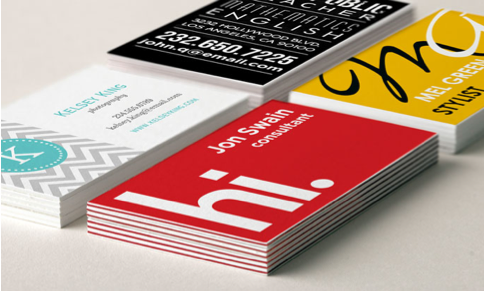
Are you handing it out often enough? Do you carry several with you at all times? Can you play with the graphics or color? Is your name big enough? Does it go with all your other materials? Have you obeyed all my rules?


Sweeping away the cobwebs will let you see places you can improve – whether it’s content, appearance, keywords & links, Social Media opportunities you’ve yet to explore, or the colors and actual appearance of your site and materials.


What’s the first thing you’re going to tackle?


PR Tip of the Week – 5/10/12

May 10th, 2012


Become Your Journalist


One way to make yourself a better pitcher is to really put yourself in the mindset of your target journalists. In the course of your research (and yes, please read pieces by your targeted editors whenever you can), try to get an idea of how the journalist approaches their subject. Think about what they need to know in order to be interested in you or your biz – the Who, What, Where, When, Why & How became a cliche for a reason. If you can figure out what they need, or what solves a problem for themselves or their readers, writing from that perspective will garner much better results – in other words, “what can I do for you?” will win more response than “what can you do for me?”


So – put on your empathy hat and create great pitches!


PR Tip of the Week 5/2/12

May 2nd, 2012


Take a Poll


For small businesses and service providers, a good way of increasing the strength of your connection with your friends, fans and subscribers is to make sure that you’re giving them what they want – it’s important to find out what that is; you have to ask and then really listen to their answers.


There are many ways of asking. You can post a question on Facebook, or tweet your question to your followers. If you have a newsletter, ask your subscribers to let you know what information you can give them or what additional services you can provide. If you blog, ask readers to comment and give you their areas of concern.


Make sure to answer the comments, acknowledge posts or tweets – make sure your peeps know you’re paying attention. The more you connect with your audience, the faster word will spread about how fabulous you are!


What PR tips would you like me to give you next? I’m listening!


Good PR is like a Great Margarita

April 26th, 2012


Consider the Margarita.


Even an ordinary Margarita is a pretty terrific drink: find yourself some generic Margarita mix, some pretty good tequila, a slice of lime, some ice cubes; shake it up or mix it up and you’re in for a pretty good time.

But consider the GREAT Margarita. A great Margarita requires some thought, consideration of your guests’ tastes, good judgment, and some special ingredients. It’s not straightforward (like a vodka on the rocks); most good mixologists have their own “special recipes”. They know their audience, use different juices, different tequilas, add different liqueurs, fruits or garnishes – the resulting Margarita is certainly more than the sum of its parts. Complex in flavor, artfully combining and balancing many ingredients, packing a great punch, it can be hard to describe, but boy is it good.

So, oftentimes, when describing a great Margarita, you might say to someone, “you just have to taste it”. 

Well, good PR is sort of like that.

It takes more than a few words to describe just what good PR “is”. Like an ordinary Margarita, an ordinary PR campaign puts together a straightforward, standard approach/pitch to a straightforward list and hopes for a straightforward result. A good PR campaign occurs when the practitioner comes from a more creative, personal approach to crafting the pitch, compiling the media list, and then actually pitching the right thing in the right way to the right person at the right time.

The good PR campaign is comprised of many different, often-complex parts that have to exist in harmony and in the right proportions, and each PR practitioner (PR-ologist?) has his or her own “recipe” for success. There is no one best way to do anything; you have to do what feels or sounds or reads “right” for you and for your audience. It takes intuition, judgment and the ability to listen to what people want. When trying to describe or tell someone how to create a PR campaign, sometimes, you may have to say, “you just have to do it”; it’s the experience of creating the specific pitches for that specific client or product that informs the content and ingredients – and nuances – of the particular PR campaign. And, like a good mixologist, you learn from each one and so get better and better at what you do.

So – if you’re a good PR-ologist, your campaigns will be complex in flavor, combine many intriguing ingredients or facets into a well-balanced and “tasty” whole, and will certainly pack a great punch.

Cheers to you! I hope your next PR campaign is as delicious, appealing and satisfying as a great Margarita.


PS – My favorite Margarita at the moment is the super-fabulous Spicy Margarita in the Penthouse Bar at the top of the Huntley Hotel in Santa Monica – what's yours?


PR Tip of the Week 4/18/12

April 19th, 2012


Anyone Out There?


Make sure you’re engaging with your audience.

Try to make sure to do a good job of monitoring your tweets and pay attention to what happens to them. If your tweets aren’t being re-tweeted within an hour or so, it’s not likely that it will spread beyond your own stream.

If you’re not getting much action or traction, try re-tweeting at different times during the day, or juggling the words/order of your tweets.

If you’re still not getting a response (re-tweets or new followers), your tweets may not be engaging enough. Take a long, hard look at what you’re saying, and make sure it’s of interest to your target audience.

Tweet, tweet!

What Are You Wearing?

April 18th, 2012


As a former TV executive and producer, I still have a lot of friends in the entertainment business. There are perks attached to that, such as getting to go to events, screenings and premieres. Last night, I was able to attend the premiere of Hallmark Hall of Fame’s “Firelight”, starring Cuba Gooding, Jr., Q’orianka Kilcher and DeWanda Wise. The movie, which is wonderful and moving (there wasn't a dry eye in the house), was written by my pal, the amazing Ligiah Villalobos and will air on ABC Sunday, April 22 at 9:00 pm – I hope you watch it.

The reason I’m writing about this event is that it was very interesting to look around the crowd of attendees and see whether or not people were wearing clothing that expressed their “brand”. I think it’s important to extend your branding through everything you do – even including how you dress in public. Show biz events tend to get this aspect of business right; people in the industry tend to have a pretty good idea of who they are and what they’re doing – and know how to express it via clothing; there are a lot of “uniforms”.

Last night’s event was held on the lot at 20th Century Fox. Although it did have a red carpet, and all the amazing cast were in attendance, it was not one of those glamorous, black tie premieres. Therefore, most of the people there were dressed to express, rather than dressed to impress. By that I mean, people were dressed as what they are – clearly expressing their “brands”. The many agents and managers in attendance were in their full-on business attire – suits and ties or chic business dresses for the agents, “business casual” jackets, suits and dresses for the managers (who tend to be a little less corporate). The other showbiz guests there mostly dressed their parts – writers, directors and other creative types were more casual and bohemian; the businesspeople looked, well, biz-y; it was, after all, held at the end of everyone’s business day and most people came straight from work. One exception: the actresses from the wonderful cast of young women were all dressed beautifully for the red carpet – in glamorous dresses, fab heels, jewelry and bags – dressier than all the other guests, looking their part; standing out from the crowd, a little exotic. They were just right.

With most of the other guests, it was hard to tell who they were and what they did – friends? Family? It was the usual gamut from jeans and a tee to something you’d wear to drinks. I brought my sister Sarah Shaw, who helps entrepreneurs create successful product-based businesses and we had fun trying to figure out what everyone did, based on their clothing.

In your business life, it’s important to know how to dress for meetings, networking events, pitches, trade shows – anything you do. Most businesses have a “uniform”, the standard attire for your field. Some are super-corporate, some are more relaxed. It’s good to figure out the “uniform” and then add your own personality to it so that you are comfortable and confident. As a publicist in my area (mostly fashion & beauty), I need to look fairly stylish, not too corporate, but must never “speak” louder than my clients; my job is to stay more in the background visually – I am not the story, my client is. My own style is fairly casual/classic (East Coast upbringing), so I try to stick to that; I’m more comfortable and it works for me and for my clients.


What are YOU wearing?

PR Tip of the Week 4/4/12

April 4th, 2012


Like What You Do


One thing that can make you stand out from the pack is your passion for what you do, the product you created or the service you provide.


As businesspeople, we all go to lots of events, meet lots of people and find ourselves pitching (in one way or another) almost constantly. Your enthusiasm and passion for what you do is a welcome “plus” in any pitching situation; it makes you come across as warmer, friendlier and more of a pleasure to work with; this goes for chatting with journalists as well.


Remember – people like to do business with people they like whenever they can. So be enthusiastic and have fun; you’ll get a great response.


How to Pitch to a Trade Publication with Shelley Kelly of Beauty Store Business

April 2nd, 2012


No, not this kind of pitching either, but you gotta love Sparky Lyle! *


Last week, we were lucky enough to have the fabulous Shelley Kelly of Beauty Store Business magazine as our special guest on the March Bonus “Ask Lizzy” call.

For those of you in a product-based business, if you want to wholesale your product and be sold in stores, it’s really important to know and create relationships with the trade publications that serve your field. These trade publications are read by members of your industry – both the wholesale and retail side (vendors and store owners), as well as by the manufacturing side. They are a place to share your company news (new hires, new lines, mergers & acquisitions, etc.), as well as to get exposure to store buyers for your products. They are a great place to find out about upcoming trade shows, new manufacturers, new trends in your business and much, much more.

Beauty Store Business is the bible of the beauty products industry (cosmetics, accessories, appliances, beauty & hair products, nail care and more). Years of experience at this major trade publication gives Shelley the know how to be a wonderful  “Ask Lizzy” guest. She gave listeners TONS of information about how trade publications work and what they can do for your business; how to know when you’re ready to pitch to a trade publication (where you should be in your business; how much inventory to have on hand and more), what happens once you’ve pitched; what you can expect being featured in a trade publication to do for your business and much, much more.

To listen to this fabulous “Ask Lizzy” call, click HERE.

Plus, Shelley talked in detail about and gave her great tips on how to pitch to a trade publication; she has provided us with a great doc that you can read below or download the PDF HERE.


Without further ado, here are Shelley’s great tips – please pay attention!


Twelve Tips for Pitching to a Trade Magazine Editor


by Shelley Moench-Kelly

Managing Editor, Beauty Store Business magazine


1. Know the publication.

Please do your homework. Call the company and ask for an issue of the magazine or check it out online. If you’re pitching the latest and greatest lipstick to a publication that focuses on skincare, you’ll likely get pushed to the back of the line and may never get coverage. A research call to an editor to see if your product is a good fit for the publication will save you both time and potentially wasted effort.

2. Understand the difference between trade and consumer publications and who you want to market your product or pitch your story to.

Few trade magazines are available to the regular consumer. Trade magazines are generally available by subscription-only for members of the profession. That said, when marketing or pitching stories to trade magazines, understand that product quality will likely be of a higher-end than that which is available to the general public, and that stories will be centered on those same professionals. These days, the beauty industry is a bifurcated market; that is, high-end products vs. value-driven products. We are among the first to pick up on trends in the marketplace, so that’s also key to pitching your product. Also, trade magazines rarely feature “mass” items; that is, items that are readily available in drugstores, Wal-Mart and the like. We generally are looking for pro-only or exclusive items.

3. I’m busy. Make the contact count.

At any given time, I’m writing, editing copy, assigning stories to freelancers, answering phone calls and sending emails all over the globe. I go through 500+ emails a day, so receiving calls from PRs or companies asking if I’ve received their emails only serves to waste everyone’s time. If I’m interested in your product or story pitch, I WILL contact you. Additionally, we cannot promise if or when a product will be in the magazine, so please don’t keep asking us for feedback or updates. One follow-up—about a month after you’ve sent your product—is enough.

4. Maximize the effectiveness of your emails.

If you’re pitching a new product to me, here’s the ideal submission:

1.     • An official, fact-laden press release (not an attachment)

2.     •  A high-resolution image (At least 300dpi, 4×6 inches)

3.     • The actual, non-returnable product for future in-house photography

I get so many emails with microscopic photos, and on top of that, the sender then asks that I email back if I need larger photos. It’s such a waste of time, so please, check the image size before you send them to me. Think of it this way: you are asking me for coverage of your product in my magazine—coverage that you’re not being charged for. Don’t you think it would benefit us both if you made it easy for me to feature that product?

5. Identify yourself and your product.

If you do send me a product for consideration, please send it to my attention and identify it in the package. Countless, unlabeled products come through my office; please don’t make me sift through those 500 daily emails to see what product came from which agency or company. Print out one of our emails to each other, staple your card to it and use it as packing material if you need to. At least I’ll know immediately where it came from.

6. We cannot allow anyone to see copy before publication.

This is our company policy. Maybe other publishing houses have different rules, but this is ours. If you send us a press release, it is our editorial prerogative to extract from it the information we need for a product writeup or feature story mention. We cannot and will not let anyone outside of the company view any copy before the magazine is published.

7. Non-returnable product samples.

In addition to high-res images, we ask for non-returnable products, for two reasons. First, as editors, we need to see, touch and feel the actual product and know its ingredients, etc. at a glance in case there are questions from readers. Secondly, if there are other opportunities to feature the products and different photo shoots are required, we can physically place the product against a custom background to fit the needs of the feature. We understand that not every company is in the position to do this, and will work with those who need their products back. If we have the product in the office, it allows us easy access for future placement and saves you the cost of back-and-forth mailing.

8. Understand our deadlines.

While every publication is different, we work 2-3 months in advance of the publication date. My particular magazines have editorial calendars with due dates for editorial copy and products on their websites. So with us, if you’re pitching a summertime skincare lotion with SPF 15, you’d better start before February to get it in our April or May issue so our readers can stock their shelves for the June-August summer swimming season. You can access our editorial calendar on our website or call us and have it sent to you.

9. Cross your “T’s” and dot your “I’s.”

Please keep releases free from typos, fluffy verbiage and obscure or nonexistant contact information. I want to know a product’s specifications, its ingredients and its purpose(s). For example, “Bob’s Shampoo is made with aloe vera and is formulated in a non-sudsing formula that cleans the hair without stripping its natural oils. It also contains jojoba oil and honey to smooth the hair and lock in moisture; it’s ideal for fine hair.”

A press release that touts an item as “the greatest,” “the fastest,” the most “strawberry scented” version of whatever makes it better than its competition is just fluff unless you have documented scientific proof that you mention in the press release.

Please don’t make me have to research the contact information – I need the company’s name, telephone number, toll-free number, website and email, as well as the PR’s. Our company (and remember, others may be different) publishes company contact info, not that of a public relations contact.

10. If you need to call…

Please call my (or any magazine’s) receptionist to verify an editor’s name and its pronunciation before you speak to them, particularly for anyone with an unusual name. It shows that you’ve done your homework and can be indicative of your thoroughness later on. I can count on one hand the number of marketing and PR executives who have done this, and they are my best contacts.

11. Direct all products to the proper editor.

If a freelance writer that we’ve hired or one of our sales executives contacts you about your product, do not send it to them! For my magazine, the products should be sent to the products editor or the editor in charge of the freelancer’s story. Please address the package to the editor and include a brief note about the product’s origin and who you spoke to about it. That way, the editor can categorize the product as support for a current story or as a future submission for the magazine.

12. It’s a two-way street.

The bottom line is this: There are few opportunities—such as feature stories and product write-ups—that are available to companies where their products can be published for free in a trade magazine. But real estate is prime, and the easier you make it for editors to access your product information, the higher chance you’ll have of seeing your product featured in the magazine. The relationship works both ways…fulfill our submission requirements and you may be chosen for publication in the magazine. But it’s not a tree you can return to time and time again. Advertising dollars are what keep the magazines going, and you’ll likely receive a call or two from advertising executives if you’ve been featured in the publication. Either be prepared to discuss advertising opportunities or don’t come calling again. It’s just business.


* Sparky Lyle was an All-Star relief pitcher for the New York Yankees from 1972-1978; during his stellar tenure with the Yankees, Lyle was a three-time All Star, a two-time World Series Champion and won the 1977 AL Cy Young Award (the first AL reliever to do so). He was the first lefty to collect 100 wins in the American League; he also set AL and Major League records for saves and saves by a left-hander. Lyle is also famous as the author of “The Bronx Zoo”, a 1979 tell-all about the Yankees’ 1977 & 1978 World Series seasons. He is currently a minor league manager, and will always be a god of baseball.

PR Tip of the Week – 3/21/12

March 21st, 2012


No Comment!


Do you sometimes feel like you’re blogging into a vacuum?


One way to get connected with your audience is to make sure you are responding to comments you receive. Often you can start a dialogue with your readers that others will pick up on; your responses will encourage commenters to come back and chime in on other posts. And encourage your readers to comment on future posts – you can end with a question or a provocative statement, or simply ask for ideas or comments. You’ll see your interactions improve and you’ll feel like you’re writing to an audience.


What do you do to get people to comment on your posts?